
1. Questions and Answers
Returning from the Heroic Age Expedition 2026 in late July, most questions from colleagues, family and friends were related to my dive in Alvin to Terra Nova. Were you nervous? How many could fit inside the sub? How deep did you go? How long did you have to decompress on the way up? etc. Here are answers to all those questions and more, with images and films from Alvin Dive 5361 to Terra Nova on 13 July 2026.
For me, it all started in early spring 2024 when I was approached by John Geiger, a good friend, and president and CEO in the Fram Museum’s long time cooperation partner Royal Canadian Geographical Society (RCGS), who asked if we could assist in the work of locating documentation related to the sinking of Quest – Ernest Shackleton’s last ship. The preparation of the RCGS Quest Expedition and the discovery of Quest in the Labrador Sea off Newfoundland in June 2024 is well documented online, in a special edition of Geographica, and through hundreds of news reports in most of the Western world.
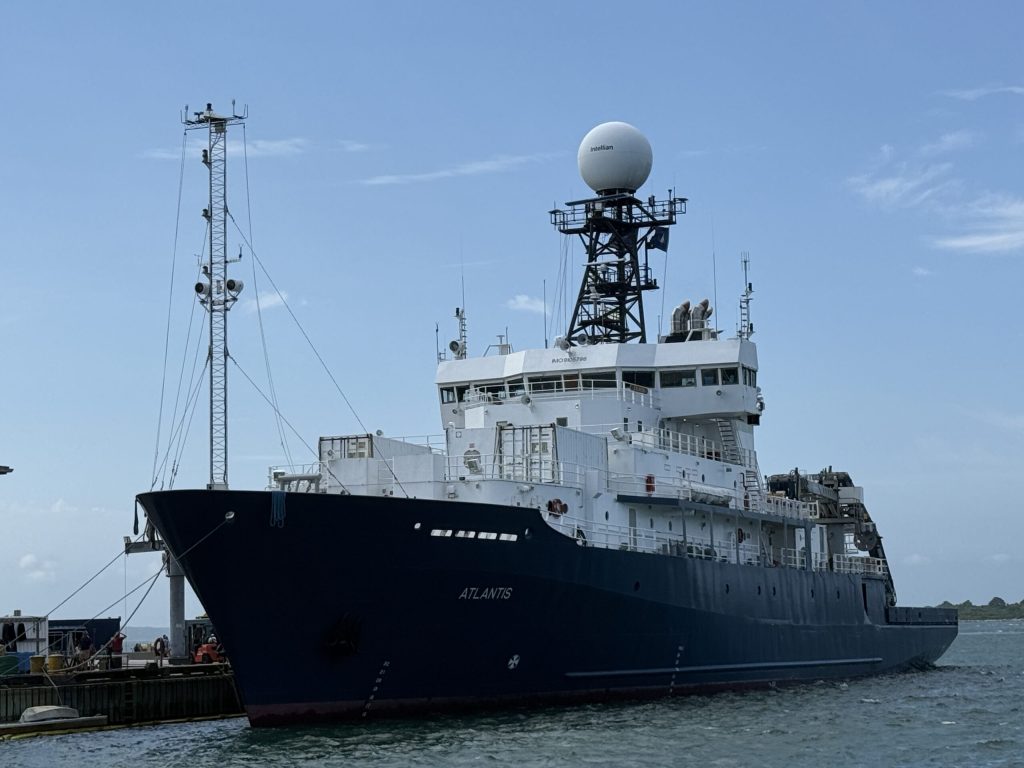
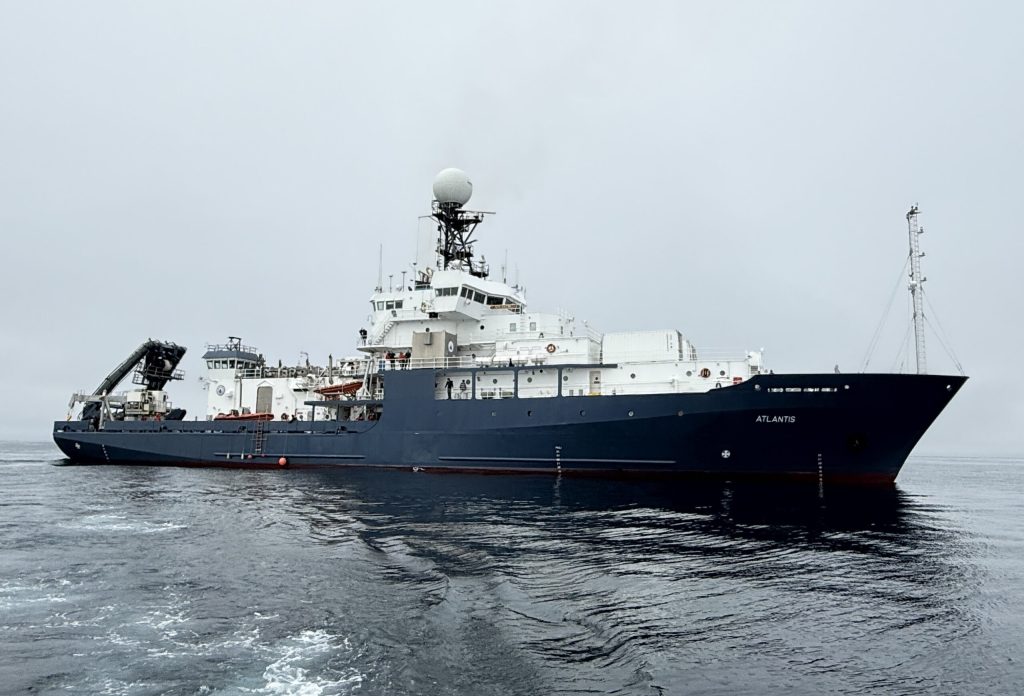
A plan was quickly made to return to the wreck with the latest technology and document the ship and its surroundings in all its details. John and his staff in RCGS, in cooperation with David Mearns, a marine scientist and one of the world’s most experienced and successful deep-sea shipwreck hunters, worked for two years to finance the next expedition and find a suitable expedition partner. Not only to revisit Quest, but also to do the same research on Terra Nova, as the wrecks are only two days of sailing from each other. Through David, Woods Hole Oceanographic Institution, Massachusetts with is vessels R/V Atlantis and DSV Alvin joined the expedition. Atlantis is a Global-Class research vessel and flagship of U.S. Deep Submergence. Its length is 274 ft (83,5 m) and beam is 51 ft (15,5 m). Normally it carries a crew of 20, an Alvin crew of 11, and 24 visiting scientists, while we were 59 people on board leaving Woods Hole on 2 July 2026.
I shared a cabin with Jan Chojecki, as on the Quest Expedition in 2024. Jan is the grandson of John Quiller Rowett, who financed the Shackleton-Rowett Expedition in the Quest in 1921-22. He is also the author of the book The Quest Chronicle. We shared a small bathroom with the cabin next door. Description of the ship is available from the WHOI website:
R/V Atlantis – Woods Hole Oceanographic Institution


2. Alvin
Alvin carries one pilot and two observers. It is certified down to 6.500 meter below sea level where the pressure is 646 atmospheres, 9.678 psi (pounds per square inch or 680 kilos per square cm). The atmosphere inside Alvin is the same through the entire dive, so no need for decompression during surfacing. While the original Alvin was built in 1964, the current version has no parts from the original. Check out this article for the history and specifications on Alvin:
https://en.wikipedia.org/wiki/DSV_Alvin


As the expedition and its findings are well documented online and in the upcoming special edition of Geographica, this article covers only the preparations of Alvin Dive 5361 and the dive itself.
Already on Friday 3 July, Alvin Expedition Leder and chief pilot Bruce Strickrott gave a presentation on Alvin, its construction, how a dive is organized and general information on the vessel. After breakfast on Sunday, Bruce showed us Alvin in the hangar and went through its features and some of the safety equipment.


On Monday the 6th, Jan and I got the full guided tour of Alvin’s interior, all the equipment, emergency procedures, etc. This included procedures in the unlikely situation of the pilot getting incapacitated. As seen on the following photos, the cabin is filled with buttons, switches, lights, communication equipment and bottles of oxygen.
We learned how to release the six stacks of steel weights used to provide negative buoyancy for the trip to the ocean floor. The steel weights allow deep dives to be achieved more rapidly. Some of these weights are jettisoned on each dive and left at the bottom. Normally one is dropped when reaching the sea floor and one when to start the journey up. If releasing these weights are not enough to get quickly up to the surface in case of emergency, there are separate switches to release the sample basket, the two manipulator arms, the large main batteries, etc. If the main batteries are dropped or incapacitated, it is necessary to switch over to the smaller emergency batteries.
There are three different communication systems on board. One to keep in contact with Atlantis during the dive, an emergency VHF radio to use while on the surface, and a radio to talk to the swimmers outside Alvin when it is preparing to dive or when it surfaces after the dive.
Dedicated oxygen and carbon dioxide sensors track atmospheric levels, allowing the pilot to monitor air quality continuously. Alvin carries packed canisters of CO2-absorbing chemical media (such as lithium hydroxide) inside the sphere for each dive. An internal blower/fan actively moves cabin air through the active chemical bed to neutralize exhaled carbon dioxide. Emergency Breathing Apparatus masks are available for each occupant, which supply independent oxygen while scrubbing out carbon dioxide if interior air integrity is questioned. If the dive is extended for different reasons, the oxygen bottles need to be changed when they run empty. Alvin carries emergency oxygen for more than 90 hours below the surface.
We also went through how to put out a possible fire on board. To reduce the fire hazard on board, no external technical equipment is allowed. This includes cameras and camera phones. However, it was possible to bring Meta glasses for photography and filming inside the sphere. Synthetic clothing is not allowed on board in case a fire should erupt. Only clothes of natural cloth like wool, cotton and linen can be worn on board.
Not to bring our own cameras caused no problems as Alvin is equipped with several cameras. Several external cameras pointing forward or below, of which the two observers can operate one each through an onboard Ipad. A loose camera was left on a stand in the sample basket. This could be placed on the sea floor as a selfie stick. Three interior GoPros were filming the pilot and the two observers during the first part of the dive. In addition, the two observers had access to a SLR camera. I also brought a pair of Oakley Meta glasses provided to the expedition by Meta.
Bruce also advised us to bring a favourite snack and personal souvenirs and potential gifts on the dive, and to make sure to visit the toilet a few times before boarding Alvin. A ‘Little John’ peeing container for each crew member would be available, but the thought of using one in the cramped space below made sure only a limited amount of coffee and water was drunk before my dive.


3. The Mission
As there was a limited number of available dives on each wreck, I chose to dive on Terra Nova because of the connection between Roald Amundsen and Robert Falcon Scott, and the actual meeting between Fram and Terra Nova in the Bay of Whales on 4 February 1911.


Five dives were made on Quest in the period 7 to 10 July. Both dives on the 9th were cancelled because of the weather. We arrived Terra Nova early morning the 12th and I was scheduled to dive with John in the afternoon the same day. Unfortunately the dive was cancelled because an iceberg rudely heading directly towards us, although very slowly. But we were ready the next morning. An early shower not to bring body odour into the sphere. The divers were also told to avoid scented soap and aftershave. I wore a layer of wool from top to bottom, a pair of training shorts of cotton, and a warm Fram jacket in 80% wool. A light breakfast when the galley opened at 7, half a cup of coffee and a glass of water, was followed by a few trips to the toilet.
This would be the 7th dive on the expedition. Quest was on 390 meters, more than twice the depth of Terra Nova’s 166 meters. The advance instructions and training had been informative and detailed. All of this, combined with the excitement and enthusiasm of all the expedition’s previous divers, made me really looking forward to the dive. Not only to see the wreck of Terra Nova, but the whole adventure of experiencing Alvin and just to spend so long time so far below the surface.
The evening before I had prepared a pillow case full of souvenirs to bring with me into the sub. These included:
- The Quest replica enamel plate signed by all 59 crew members on the expedition.
- A Quest replica enamel cup.
- A Shackleton sledging flag and small Fram flag. All of these had already been on at least one of the dives to Quest.
- The Fram Museum banner, last seen in space with astronaut Jannicke Mikkelsen during the polar orbit of SpaceX flight Fram2.
- A Robert F. Scott plaster bust and a Roald Amundsen plush doll from the Fram Museum store.
- A Toblerone chocolate given to me by Bruce Strickrott.
- Two copies of the book Flying Deep – a description of diving in Alvin for children. One for my grandson Sverre and one for me.
- A copy of Sarah Airiess’ graphic novel, the first volume of The Worst Journey in the World.
- A few expedition patches and Atlantis and Alvin stickers.

The mission for Alvin Dive 5361 (rcgs/whoi).
4. Dive 5361
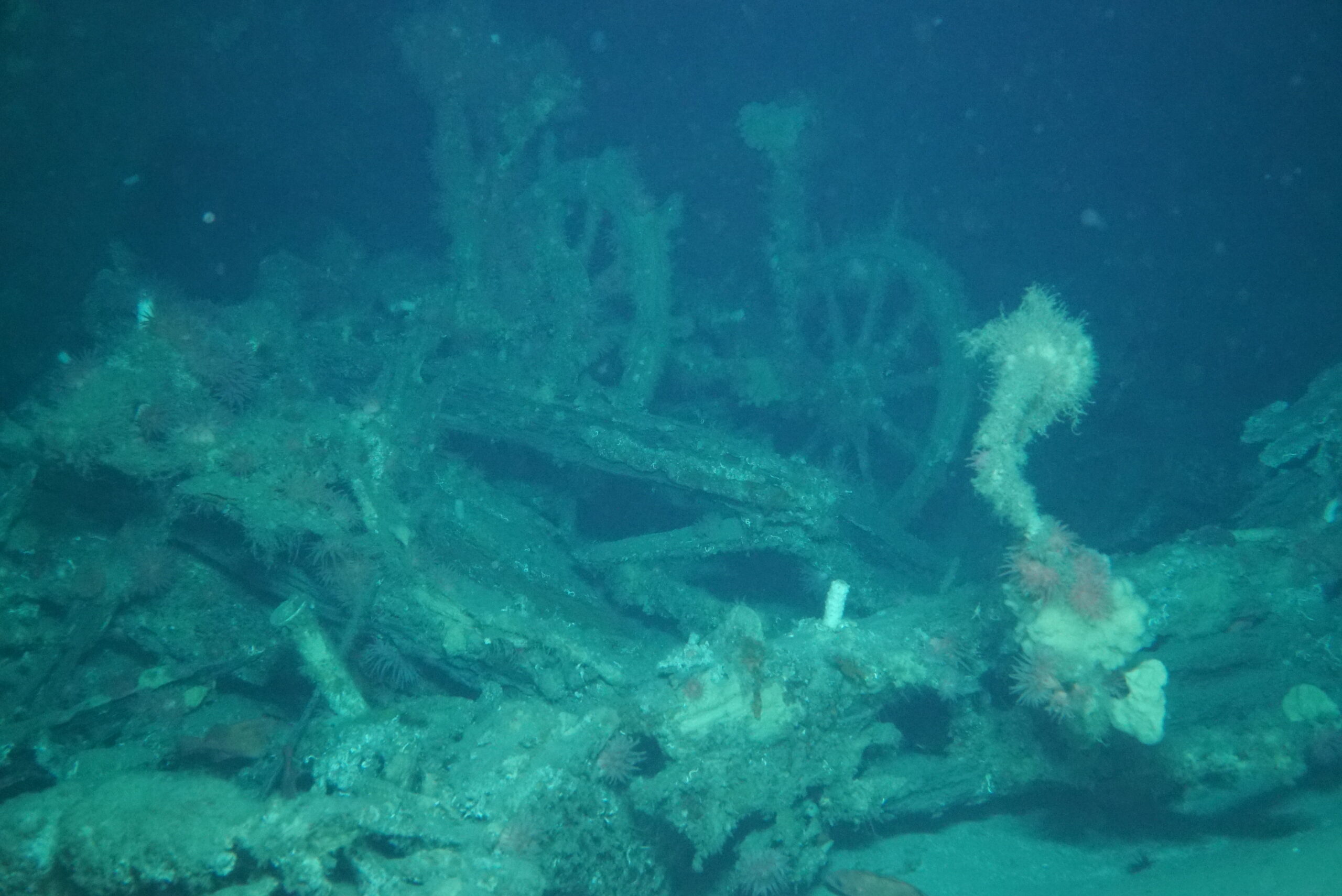
All the following photos and films are from Alvin Dive 5361 to Terra Nova on 13 July 2026. While many other photos and films from different dives on Terra Nova are available, I choose to keep the illustrations strictly to dive 5361. Photographers are Jan Chojecki (JC), Geir O. Kløver (GK), Kevin Chan (KC), John Geiger (JG) and Benen ElShakhs (BE). Photos from the external cameras and interior GoPros are credited to RCGS and WHOI.


5. The Terra Nova


6. Surfacing


Video 2426?


7. Thanks and further reading
A lot more information, photos and films from the expedition will be available later. To start with, a special edition of Geographica, a television documentary, and 3D models of the wreck – both 3D-printed and digitally available, and I am sure there will be more. At the Fram Museum, our exhibition will be updated with images and films from the expedition. The plan is also to include models of the wrecks themselves.

New images from the wreck of the Terra Nova from the Heroic Age Expedition!